Be Kind To Dragons

adventures at higher altitudes

Menu
  • Home
  • Nepal Treks
    • Langtang
    • Annapurna Circuit
    • Tsum Valley
    • Gokyo and Everest Base Camp
  • Out and About
  • Ceaseless Melody
  • The Daily Proverb
  • Classic Texts
Menu

Category: Ceaseless Melody

Music, Books, Life

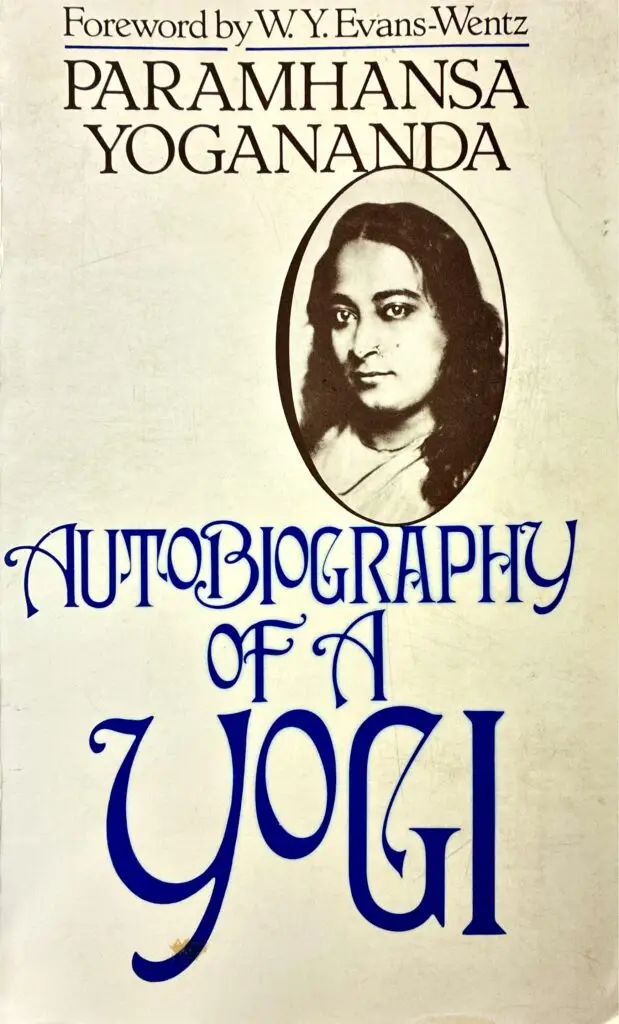
Autobiography of a Yogi – another look at a classic text

Posted on July 26, 2025August 8, 2025 by ianraitt

I first read this book around 1977. Then again in 2018. And once again in 2025. On this last re-reading, I was surprised by how the book seemed so fresh, as if I were encountering it for the first time. This perception might merely be related to declining memory retention, but what does persist and is re-encountered, is a sense of the book’s atmosphere. This is constructed from the author’s manifest sincerity, his ability to patiently instruct Western readers in Indian yogic tradition, and from a gentle humour that infuses the text. There is a clear account of his early life, of his acceptance by a Master into a yogic tradition, and of his teaching role in the West. Most of all, the book emanates an unapologetic sense of the miraculous, that there is an energy, wisdom and purpose beyond our mundane world-view. This book challenges the maya and illusion in which we conventionally live, and explains why in India, there is an alternative, as old as the hills.

He was born in January 1893 as Mukunda Lal Ghosh, of the Kshatriya caste, Yogananda being his given name upon entering the ancient monastic Swami Order in 1914. Immediately in the first chapter we have a couple of miracles. There is the story of Abinash Babu, who worked in the same office of the Bengal-Nagpur railway as his father, Bhagabati, who was Abinash’s superior. Abinash asked for leave to visit his guru, Lahiri Mahasaya, in Benares. His father ridiculed this idea, but when the two of them met up going in the same direction in the fields, there was a dichotomy in their thoughts. His father sought to console the employee, and counselled worldly success, but Abinash was simply repeating the name of his guru internally. Suddenly the form of the guru appeared on the path, and admonished the father: ” … you are too hard on your employee!” The vision of the guru vanished into thin air, but Bhagabati had got the message, and resolved not only to grant leave to Abinash, but also to take his wife and go with him to the guru in Benares. On meeting the guru the following day, Lahiri Mahasaya repeated the exact words to Bhagabati: “You are too hard on your employee!”

This immediate introduction to the occasional deployment by gurus of incontrovertible forms of communication sets the tone for many such interventions. For example, in the same chapter there is an account of the time when as a young boy Mukunda was stricken with Asiatic cholera, and close to death. By this time, the parents were established devotees. His mother instructed him to look at a picture of Lahiri Mahasaya on the wall, with the admonition ‘bow to him mentally’. A blinding light, also witnessed by his mother, enveloped the whole room, and his nausea and other symptoms disappeared. Furthermore, in this chapter, we have an example of the inscrutability and playfulness of the guru. He resisted being photographed. This is a common trait in some gurus: they do not want disciples to rely on a photo, which ultimately is a dead image. When, against his wishes, a photo was taken of the guru with a group of disciples, on development it was found that the image of the guru was absent. Then a renowned photographer thought he would be crafty and took a series of twelve photos of Lahiri Mahasaya in meditation. On each one the background screen was visible, but there was no image of the master. Finally the guru posed for the distraught photographer and the image was clear. Yogananda thinks it the only one to exist, and it is reproduced in the book.

Warming to his theme, subsequent chapters have such titles as: The Saint with two bodies (Swami Pranabananda), A “Perfume Saint”, The Tiger Swami, The Levitating Saint. As Yogananda says, “My inquisitiveness about saints was well known among my friends; they delighted in setting me on a fresh track.” He was, at a young age, already inevitably in search of this own guru. But in describing the very real perfumes produced by the Perfume Saint, he declares: “Performances of miracles as shown by the “Perfume Saint” are spectacular but spiritually useless. Having little purpose beyond entertainment, they are digressions from a serious search for God.”

He also relates that the Tiger Swami developed a phenomenally rippled body, and a fearsome will power and sense of psychological dominance. He was indeed able to overcome with bare hands the fiercest of tigers in a caged environment. But his ultimate triumphant encounter, described in detail in the book, resulted in a weakened state after blood poisoning set in, and convinced him to accept the advice of a guru to “subdue the beasts of ignorance roaming in the jungles of the human mind” instead of live tigers. But Yogananda is kinder in his comments about the bi-locating saint and the levitating saint, whom he believes were not practising this kind of siddhi with the aim of impressing others, but that these powers were offshoots of intense and persistent meditational devotion over the years.

One of the endearing characteristics displayed by Yogananda is his reluctance to spend much time on his studies in school or later in university. He relates that he spent far more time at the Calcutta bathing ghats next to the cremation grounds, which he describes as “especially gruesome at night … considered highly attractive by the yogi. He who would find the Deathless Essence must not be dismayed by a few unadorned skulls.” He was not burning the midnight oil over his books, but next to the burning ghats. This led to a crisis of panic before the Hindu High School final exams, especially as he had promised his father that his devotional practices would not interfere with graduating from secondary school.

His dilemma was solved in a way that we might whimsically mention was also ‘miraculous’. First of all, he meets a classmate who as the ideal scholar provides him with a quick guide to the kind of questions that will come and the pitfalls to avoid. He gets coaching in all the subjects from the classmate, all that is, except Sanskrit. But the following morning in taking a short cut through a weed-strewn vacant lot, what should he see lying there but some loose printed sheets: “A triumphant pounce; in my hand were Sanskrit verses!” The next step is to get some intense instruction from a pundit, and whatever transpired it helped him pass the Sanskrit exam. A further irony awaits in the future, as when he at last meets his guru, Sri Yukteswar, the guru requires him to enrol in a university, because seeing the future, he could discern that Yogananda would be more accepted in the USA with a university degree in tow. Needless to say, the revision crisis repeats itself during his university studies, but is also resolved in another ‘miraculous’ way.

His early life displayed that he was the odd one out in his loving family, and even though the parents had been devotees of a spiritual master who had passed away, he was urgently set on finding a guru, and living a life of devotion. All his anecdotes about visiting swamis and miracle workers were the prelude to leaving home and entering an ashram in Benares. However, this does not bring peace and realisation, but instead conflict and dissent, as his fellow devotees chastise him for wanting to meditate more than carry out chores in the ashram. He meets test after test, but these problems and challenges lead up to the perfect moment for encountering the true master, who is equally overjoyed in meeting the chela.

Looking again at this remarkable and enduring document, has explained why Steve Jobs made it his task to read the book once a year. It is simply packed with more implications and indirect teachings, all hidden in plain sight, than one can possibly grasp on a single reading. Adding to its special character, the style is a little arch, a little florid, a little ornamented, perhaps redolent of the late 19th century, and whether you want to characterise it as an expression of ‘Indian English’ or not, the tone is self-deprecating, free from vanity and imbued with puckish humour. In addition, the copious and always fascinating footnotes, constitute themselves a primer in the Indian spiritual traditions. Everything in this book, while charting a life of devotion and service to the spiritual ideal, is also there as a teaching example to be cherished.

We must also remember, that the true miracle is a changed consciousness.

Snow Mania – Winter in Britain: 1962-63

Posted on March 2, 2025March 14, 2025 by ianraitt

A few memories linger from that winter. The first tiny, tiny flakes of snow that fell tentatively from a heavy sky, then thronged in a graceful dance, and finally cascaded down relentlessly. The unexpected wildness of deep drifts on the steep bank of the playing fields shared by the two schools, the Junior and Senior Academies. And the great, joyful snowball fights that erupted at break times. My response to the snow was purely aesthetic, but the craving for the obliteration of all distinctions and differences comes from a deeper wellspring of the psyche. The longing for the sight, sensation and swish of falling snow has never left. But it caused so much disruption as Britain did not prepare for these infrequent severe winters.

With my 11th birthday in January of 1963, I must have been in Primary 7 of Perth Junior Academy, the qualifying year, when the somewhat dreaded 11+ exams had to be taken. Often stealing glances out of the classroom window towards Necessity Brae, with its fringe of dark pine woods, I would look with a joyful expectancy at the dark margin against which the tell-tale advance of a new snow shower could be seen. Icy slides in the playground, probably now banned under Health and Safety regimes, dared the adventurous. The snowball fights gave first glimmerings that I might command a force of some kind, though that only manifested a long time later on!

The cold started in December and didn’t let up until late March

Any significant snowfall and lasting cold conditions depended on the establishment of high pressure over Scandinavia, with low pressure pushing up against it from the Bay of Biscay. This brings in a strong easterly flow from Russia, where temperatures are frigid, and the wind over the North Sea picks up moisture emerging in frequent snow showers on eastern coasts. But the greatest snowfall could occur in the south of England, rather than in Scotland, as this was the intersection between the milder Atlantic moisture-laden air and the sub-zero flow pouring in from distant Siberia.

Classic anticyclone over Scandinavia with Atlantic low pressure to the south, generating the cold easterlies

Described as a ‘battle’ between the opposing air masses, the winds generated led to blizzard conditions and huge drifts of snow in hilly areas. The heaviest accumulation could be in Devon, Cornwall and south Wales, which in normal years might enjoy a milder winter climate. It was ironic that one of the coldest places was Kent, with its proximity to a glacial continental mass, colder at times than Scotland. Even if the milder air was bound to win ultimately, it might be pushed back a few times in the campaign, and at least the cold ground and snow-covered land would see a last blizzard, a final stand, preceding the great melting.

Thus began a daily march of snow showers along the quiet valley of the broadening Tay from Dundee and the North Sea. Some salted pavements shone wet and shiny, but as temperatures dropped again in late afternoon a familiar blurring of the air over Kinnoull Hill to the east hazed the outstretched town of Perth with drifting-down snow, whitened up pathways, filled and softened the daily commerce of footprints.

https://www.theguardian.com/uk/gallery/2010/dec/15/weather-big-freeze-1962-pictures

You never tired of watching flakes drift down in amber light of lamps, laying siege to window sills, smothering spindly rose bushes, dusting iron railings of front garden fences. The small bedroom, a north facing cave, a hideout, was privy to secret rituals and observances. The sash window opened up; a kneeling figure leaned a head out. Sensing falling snow on nose and hair, it breathed in the hushed garden, cherished perpetual flakes replenishing, nourishing, deepening the great white coverlet.

Then, in March, after two months of cold, the battle approached the end. Strengthening south-easterly winds brought snowfall to England, followed by rising temperatures. The last frontier of resistance was Scotland. Pavements had encrusted ice, but the temperature hovered around 39 Fahrenheit, bleak skies glowered. Finally, the moment of precipitation was near, and as the snow belt moved in, that evening the temperature fell suddenly to 32 degrees, exactly on freezing point, and immense waves of fine snow fell blindly, negligently smothering everything in the last great blizzard of the winter.

But there was no exhilaration in the northern cave the following morning. Window up, take a look out, check the temperature, now 35 degrees, and only a sense of heavy, soggy snow. Despite its impressive depth, the snow was thawing, slivers sliding off the sturdy apple tree, a quiet, sad dampness in the air. The great freeze was finally at an end, and something greatly welcomed by all but the quirky boy snow-celebrant in Needless Road, Perth, Scotland.

Autumn Winds

Posted on October 26, 2023March 14, 2025 by ianraitt

October: time of change in the northern regions, pivot towards winter. Clocks fall back; a sudden, darker onset of evening. And wind. Great movements of air boiling in the Atlantic, scattering the heavy lingering heat of summer from the Iberian peninsula, temperatures dropping from 28 to 16 in the space of a couple of days. Last weekend a compact but vigorous depression, formed off the south west of Portugal, unruly child of larger air masses currently lashing Great Britain, and surged violently across Spain, with local downpours in Extremadura, and with the wildest winds here in Archidona, in the province of Málaga.

storm over Archidona

Satellite dishes were ripped from roofs, pine trees in the forest above the town were flattened exposing shallow roots, branches were severed from the pines, and for the first time ever smoke was blown out the air vents of the Jotul wood burner, when fierce gusts harassed the chimney. Confession: the stove has been lit earlier than the ritual date of November 1st. Not such a good idea in that exceptional wind, but when a power cut ensues, at least you can boil an egg in the small, black Le Creuset cast iron pan, and pretend that you have an Aga, a tribe nowadays falling out of fashion, though affection lingers.

the faithful Jotul, cast iron with a twenty year guarantee

The autumn stoves must be gentle ones, emitting a quiet modest heat, fed slowly with those very dry wedges, cut from expiring, legendary, massive trunks of grandmother olive trees, sun-dried in the lucent air. Gentle stoves, valued as much as a source of light as of heat, even as that parent orb, now declining, now hidden by the scudding host of cumulonimbus, is still the source of all our energy, our local life force.

But of rain, not much is apparent, yet. A little amount, one impressive storm, though lasting only thirty minutes. The earth has been parched for two years or so, and the olive trees are struggling. The pine trees lean over; some fall over completely. At least twenty five young saplings were planted, but died in the drought.

a fracture, but at least the tree survived

Still, this transition from Autumn to Winter, gives a strange pleasure of anticipation, a permission to go within, to stay in the cave with the olive wedges glowing. It is said that the Autumn solstice drives one inward, not just inside the cave, but to be a little more introspective. It is the time of year to feel most alive, to appreciate shelter, to start a process of renewal by the fireside.

Still, there is repose after the storm and wonderful autumn skies. Above the Chapel of the Virgen de Gracia an ancient wall and fortification has just been restored, revealing some finer perspectives for those who make the climb.

tranquil evening above the Chapel

Winter in Ullapool

Posted on October 2, 2021March 14, 2025 by ianraitt

Ullapool is a small settlement on Loch Broom in the north western highlands of Scotland. A fishing port and the largest town in the district, it has a current population of around 1500, which has slowly increased over the last thirty years. Helen Gosch, the ceramics artist who has made her home on Ibiza, lived there for five years in the 70s, and remembers her time in a shepherd’s cottage on the hill above the town very fondly, as one of the happiest times of her life. But winter could be harsh. Helen and her partner had to keep warm as northerly gales were unleashed in the wake of passing Atlantic depressions, in a house with only one source of heat.

The cottage in winter

The cottage in Ullapool was above the village, with fine views of Loch Broom and onwards towards the famous crags of An Teallach, one of the wildest Scottish Munros. The light is one of the wonders in the north west of Scotland. There is a constantly shifting patchwork of cloud and sunshine throughout the day, and no two days are exactly alike. It took Helen twenty minutes to walk back down to the pottery where she was working, but she would come back on the Honda 50. A master potter, she is still working these fifty years later, a fine timeline of expression and dedication to an art form.

Loch Broom in winter

The cottage downstairs had a kitchen and dining room combined and another room which Helen used as a painting studio. The upper floor contained a bedroom and small spare bedroom. Heating was from an open fireplace with a back boiler, which usefully produced the hot water. Coal was burnt. There was no insulation in the roof, but heat came up from below, and also from the chimney itself. Still, you had to go bed prepared, wearing a flannel nightgown, woollen hat and socks. The fire was kept going overnight with dross, and usually it could be revived in the morning, then once again damped down until return from work at 5.00 pm.

Downstairs in the cottage

No television, so Helen painted and there was a cassette classical music club for music. Two cats were always turfed out at night, but they had a place of refuge in the outside coal shed where they could snuggle on a bundle of sheepskins. Sometimes the snow was deeper than their legs. They would catch young rabbits and bring them for inspection. The water came from a spring further up the mountain, which flowed down to a tank, and the pipe to the house usually caught sun so it didn’t often freeze. Deer and highland cattle visited.

Helen arrived in Ullapool on holiday and in conversation with one of the local estate owners found out that they wanted to open a gallery and craft shop. “Oh, I can run that,” she said, eagerly. She had majored in Art at university, with some experience in ceramics, and the Ullapool years were what started her on the great venture in pottery that continued when later she worked with the Barbara Davidson pottery near Falkirk.

In contrast to the winter, in general the climate is moderate due to the influence of the gulf stream. A record dry spell in summer lasted seven weeks. June and July are well-known for the long bright evenings, where there will be light in the north west sky up until 2.00 am. Then it can be seen low on the northern horizon creeping round to swell again in the north east at 4.00 am.

Helen was brought up in Sheldon on the Great Plains in Iowa, no stranger to winter and the great blizzards that sweep the northern states. There was special joy if a ‘snow day’ was announced and school cancelled. The house was warm though, definitely not as basic as the Scottish cottage. It was built in 1950 and had a large basement with a boiler providing central heating, much less common in Scotland at the time. If a storm threatened during the summer season, the whole family would shelter in the basement, taking the precaution of leaving both the front and back doors open, which makes all the difference if you are in the line of a tornado, of having your house ascend to the heavens, or just experiencing a mighty through draft.

Childhood home in Iowa

Helen was an American in love with Scotland: with the traditions, the earthiness, the dry stane dykes, the skies and their cloudbursts, the ever-changing light, and the demands of learning and perfecting her craft, as she experimented with making bowls, plates, teapots, in all the joy of creation that comes with a self-start in a new country.

The cottage seen through a gap in a dry stane dyke

Joys of Cleaning

Posted on September 18, 2021March 8, 2025 by ianraitt

Contemplating the emotions and sensations around our normal reluctance to get going on cleaning the house, brought up some memories of my time as a professional cleaner. Short as it was, there were lasting lessons.

The years of travail in mid-1970s Edinburgh partly revolved around the lack of a career plan, but as with current cleaning, needs must, so one had to find a job of some sorts. The Edinburgh Cleansing Department, maybe now inflated to Department of Environmental Health, wanted street sweepers, given mock dignity by the euphemism of Street Orderly. I had my cart with a dustbin, two brushes, one consisting of twigs bound to a pole, and a shovel. And each of us had a beat. The depot might have been in the Grassmarket, from which we would spread out to cover the central area of town. I remember working in the Royal Mile, and also at the West End, scanning for the dross and muck of city streets.

At the time, I was making tentative moves to improve a semi-ruined property rashly bought with an inheritance, and had approached an eminent architect who specialised in restoration of historic buildings. The eminent architect was passing by the grand Caledonian Hotel, as I was patrolling with my cart, clothed in official Cleansing Department uniform. Saw me, recognised me, eyes met. But ne’er a word of greeting. I mean – could have been a bit much to have expected him to stop and say:”Well, Ian. Keeping things in order! I knew you were interested in Conservation, but here you are keeping Edinburgh clean as well!” Then again I could have hollered at him: “Iain …” that was his name. “What brings you to these parts?”

Apart from the invisibility and tedium of a low status job, there were cold, brilliant November afternoons, skies above a sharp vivid blue, the wind as a knife. Scalding milky sugary tea at lunch break: hot mince pies, doughnuts.

In those days job seekers would scour the Edinburgh Evening Post. Worn out by the interminable demand Experience Required, I went along to Dario’s Pizzeria on Lothian Road, to apply for the post of Dishwasher. I do have experience. It was great, paid cash in hand, £1.00 an hour. I had my corner, a stool, an array of towels, and two sinks.

I was getting the hang of the dishwashing life, so maybe I could branch out and get an additional part-time dishwashing job? So off to interview in an Italian restaurant in Leith Walk. The owner said: “All the other dishwashers are women. You wouldn’t fit in. But I’ll take you on as Trainee Chef.”

Didn’t take up the interesting offer, because I was about to go back to University, but it illustrated that humble anonymous jobs might lead to something. The many students I taught over the years didn’t always appreciate the great discovery that every form of work is a form of service.

The dishwashing career ended when I became a night porter in a hotel (yes, more cleaning too!), while attending University during some of the waking hours, which would allow me to take up teacher training in Religious Education the following year.

Very happy in that dishwashing job. Had just started on a spiritual path that combined the teachings and the contemplation practice searched for since mid-adolescence. One of the books someone told me about at that time was The Practice of the Presence of God by Brother Lawrence. He was a lay brother and they gave him humble work tasks, including dishwashing. Despite lowlier status, he attracted listeners; he radiated something, and these conversations evolved into this now famous text.

At the interview where I gained my first teaching post, one of the school governors said:”Street Orderly? You really had to do that?” (shakes head)”Yes, Sir. I did”.

But it was dishwashing that started me on the up and up, and not only in outer career, but inner appreciation. I’ll never forget it.

The Joys of Cleaning the House

Posted on September 17, 2021March 8, 2025 by ianraitt

There must be some irony in this title, surely? It is an activity perfectly designed for procrastination. I’ll do it tomorrow, or sometime later this week. An activity also started when things are truly desperate; it is, as in chess, a forced move, when the King has no alternative but to move to a certain square to get out of check, for example when visitors are about to arrive. And the joys, if there be any, are rather in the result, rather than the activity itself, you may surely claim.

Certainly, a sense of virtue steals over one, when the deed is done, or rather the process has finished, another battle against the dust has been won, even if the war cannot ever be concluded. The virtue is linked to the defeat of inertia, as well as the sense of cleanliness, even if is fleeting. The house glows, a little.

One of the reasons for this, is that a kind of metaphysical levity has entered the home. (What?) Yes, it is because of the attention energy, you see. It is not just because you have “gone over” all the surfaces, but that you have given attention to the objects that clutter all homes, and this is being reflected back. Everyone likes attention, and so do the apparently banal blocks, items that are arranged, stored, around our houses, called furniture and other names. Carpets are especially pleased with attention, other than footprints. They get a thrill from being shaken.

So, for a short while, we can relax. We did our duty, possibly avoiding those judgements from visitors, and also we participated in the afterglow, consisting of a victory over our inertia, a victory in the on-going dust war, and a chance to bask in the reflection of the attention energies coming back gratefully from our objects.

But what of the process itself, isn’t it tedious, time consuming, the very reason why we put if off so readily? This is where our attitude comes in. If only we realised how much the house likes to be cleaned, we might do it more often! Yes, it is common sense that the longer you put off the task, the grubbier the place will become, nothing to do with attention energy, you say. Agreed, but you can come into an agreement to share your attention just a little more frequently.

Aids to this process are, of course, a Dyson V 11 Absolute Extra and a good pair of noise cancelling bluetooth headphones. Part of the stress of traditionally vacuuming was the noise: listen to me, how hard I am working to clean this house which you keep neglecting, it huffed. Now, the Dyson is so quiet that you can use this cordless wonder without headphones and not feel stressed, but the headphones transport you to a new recording of Chopin’s Scherzi played by Seong-Jin Cho (streaming from idagio.com). The Dyson provides a good feedback loop as well, as you can see what has actually accumulated in the collection chamber, from the innocent looking floor tiles that were actually hotching with dust, crumbs, hairs, skin fragments, all imaginable detritus, and the tiles themselves are crumbling into dust.

Now comes the bit that I actually enjoy: swabbing the decks! Really. Yes, because the mop aborbs any latent resistant particles, and the tiles really change colour pleasantly during their humid phase, and the speckless pristine floors gleam. Tell me this is not a good use of attention energy! It is a good counterweight to any dusty country, like Spain, that with tiles and movable rugs, you can get a sense of fresh surfaces, even for a day or so.

There are opposing cleaning tribes. Probably some readers will recall Quentin Crisp’s approach, which was that after five years there can be no point in dusting, as nothing will change. But he had a strict rule about picking up organic matter that fell on the floor. On the other extreme are cleaning obsessives, who might get up from a conversation and reach for the Bang as they have seen a spot that shouldn’t be there. And a word of warning: the vast array of cleaning materials are to be used cautiously, since there is evidence that inhaling all that stuff is not good for the lungs over time.

Once I shared a top floor flat in the Marchmont area of Edinburgh, typically with about another five students, heavy tenements all with bay windows to keep tabs on who is out and about and passing below. Of course, there must have been disputes about whose turn it was to clean the kitchen and bathroom and hall. The opposing flat on the top floor was occupied by a lady who lived on her own. Whenever I had occasion to knock on the door, one looked into an immaculately kept hall with a dark shiny antique table and vase filled with fresh flowers. Once I asked, well how do you keep the house looking so sparkling? Oh, I just do a little dusting, whenever I have a moment. It looked as if it was dusted every half hour. You see, the attention energy hit me in the face!

Balance is needed. Too much attention energy going out from our bodies leaves a deficit where it matters, the inner growth area. So, yes, we must keep the house in some order and cleanliness. This is why minimalism has become somewhat popular too. But that is another subject. How to reduce the clutter and bring order to the inner environment in the house (as well as the inner being).

Snow over Scotland

Posted on February 11, 2021March 14, 2025 by ianraitt

Every childhood winter was spent in a frenzy of longing for snow to fall. Granny said that it would snow if the clouds were tea-coloured. I would pester her: “Granny, is it going to snow?” But sometimes she would say with finality: “No, it is too cold for snow.” What law of nature, what observation, lay behind that statement of inherited generational wisdom?

I learned to watch the skies and had a regime of taking the air temperature four times a day. A maximum-minimum thermometer hung on the fence outside the back door, recording rises and plunges with its thin slivers of metal inside the glass tube. You magnetically drew these back to the current levels, observing the tide of mercury expanding and retreating. 34 degrees Fahrenheit, two degrees above freezing point, usually produced snow, whether the temperature was rising or falling. I would write entries in a ledger on the daily weather conditions, and note the barometric pressure too, pretending to take a scientific approach; and though nothing was ever done with the data, I became a snow observer, a snow steward, a snow celebrant.

Snow covered road near Aberfeldy, February 2021

The weather forecast on the radio at 5:55pm became the passionately awaited moment. On television, the Sunday afternoon , a BBC programme, “Weather for Farmers and Growers”, gave the five day Atlantic chart future. Moods, almost bipolar, would change depending on the probability of snow ahead. Snow was forecast, at least on the hills, when a strong blast of wind came from the north west or the north. But the most lasting and stable conditions for snow depended on a strong east wind, generated by high pressure over Scandinavia, and low pressure in the Bay of Biscay, bringing frigid air all the way from Siberia.

I had another motive for wanting it to snow: I had started skiing, and went to the Cairngorms in February half-term, and also at the weekends to Glenshee. While the commercial development of skiing was getting underway, the doyen of off-piste skiing in those days was Valdemar Axel Firsoff (V A Firsoff), whose book, published in 1949, had almost instant classic status: The Cairngorms of Scotland on Foot and Ski. He described his ski-touring explorations of the high Cairngorm plateaux and possible descents of remote corries on ski, using skins attached to the skis in order to climb up.

One of his sayings was: The Devil is not as black as he is painted. He used this to justify his habit of solo climbing and skiing; he was a loner. Received wisdom meant that this was quite risky, so ´the devil´ was the great danger of going it alone. As I was a bit of an evangelical Christian at the time, I found this idiom to be quite intriguing. I also found Firsoff’s accounts to be so inspiring that I started to study the map of the Cairngorms National Park, and became an armchair expert on what might be done. Later I would make some forays into the hills in winter, but not on skis it must be admitted.

Looking at the long list of books that Firsoff published, it is also intriguing that one of his interests was astronomy and cosmology. He was an amateur astronomer and may not have had formal training in these fields, but he was a prolific publisher of popular science books that speculated about the universe. This was quite unknown to me at the time I read his Cairngorm books, but it resonates now. I used to state a bit pompously at the age of ten that I was going to be an astrophysicist. His enthusiasm and dedication earned a mention from Patrick Moore at the time of his death in 1982. [http://adsabs.harvard.edu/full/1982JBAA…92..139M]

My appreciation of Mr Firsoff deepens. So, he was an amateur astronomer and a speculative cosmologist, who loved mountains and rocks. I had started a geology collection in the garden shed. Was he maybe of Norwegian descent? He did work as a translator of Scandinavian languages. However, he was born in the Ukraine. The long solitary walks I took during adolescence also tied in to those future forays into the Cairngorms. Mr Firsoff may have walked and skied alone, but he certainly took this reader with him. Meanwhile, from the small bedroom in Needless Road, Perth, I looked north past the apple tree and yearned for precipitation of a whiter variety.

Snow covers a building near Braemar – February 2021
Ian, the Scot

Ian, the Scot

A Scot who lived in five continents, now using some free time to attempt some of the classic treks in Nepal, where he lived before. As well as contemplating why we like to move through majestic three dimensional geometry, there could be some reflections on life´s higher altitude.

Subscribe to Receive Updates

Check your inbox or spam folder to confirm your subscription.

Recent Posts

  • Nepal Notes: Demonic trumpets and vivid necklaces
  • Nepal Notes: day hike to Namobuddha
  • Nepal Notes: Animal Welfare
  • Nepal Notes: a wondrous sound
  • Nepal Notes: Christmas
©2026 Be Kind To Dragons